Farm animals
Cameroon Sheep
Ovis aries
Species originDomesticated
Audio guide
Listen to the story of this animal
0:000:00
Cameroon Sheep
- Description
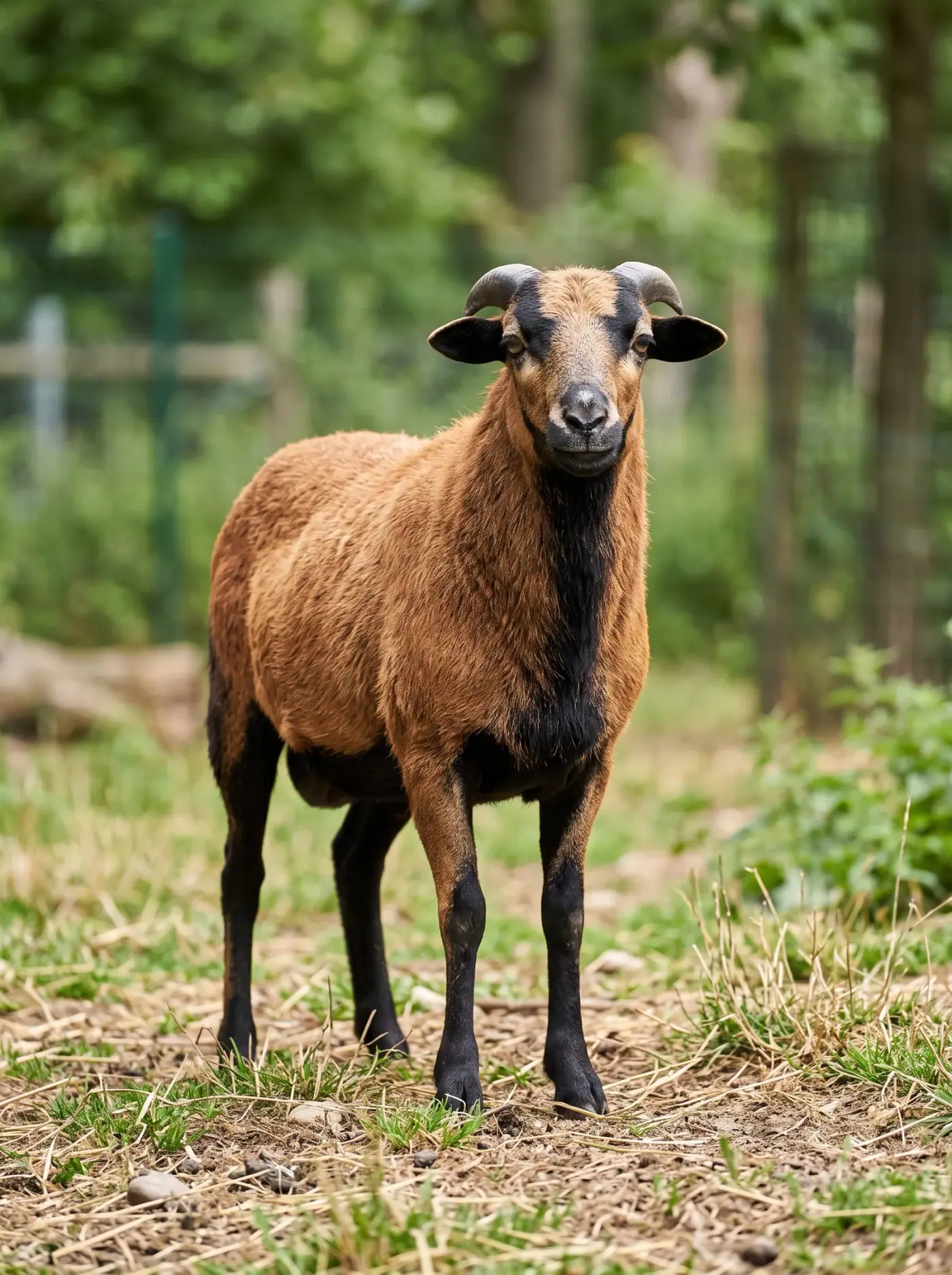
- The Cameroon sheep is a small, slender domestic hair sheep with a short, close-fitting coat, typically reddish-brown to black, often with a darker back stripe and a paler belly. Rams carry prominent sickle-shaped horns and a mane over the neck and chest, while ewes are usually hornless. Ewes weigh roughly 35-50 kg and rams around 45-60 kg, standing about 60-70 cm at the shoulder.
- Habitat
- This is a domestic breed derived from the West African Dwarf (Djallonké) sheep of the savannas and open, dry regions of West Africa. Hardy and undemanding, it has become popular across Europe as a landrace kept on farms, in parks and in petting zoos.
- Diet
- A herbivore that grazes mainly on grasses and herbs, and also browses leaves. In human care it is fed hay along with fresh greens.
- Reproduction
- Gestation lasts around 150 days, after which the ewe usually gives birth to one or two lambs. The breed matures early and can breed year-round, so up to three lamb crops within two years are possible.
- Lifespan
- Cameroon sheep typically live about 12-15 years, and individuals in good care can reach an even greater age.
- Did you know?
- Unlike woolly sheep, the Cameroon sheep is a hair sheep: it grows a fine undercoat in winter and sheds it naturally in spring, so it never needs shearing.
Homeland & habitat
Where the cameroon sheep lives
Spin the globe to see where the species comes from and where it lives today.
West AfricaA domesticated dwarf sheep breed developed in the savannas and dry regions of West Africa, now kept worldwide.
Loading globe…
Native rangeIntroduced / also today
Drag to rotate · double-click to recentre on the homeland
10 facts about the cameroon sheep
The cards keep rotating — hover with your mouse to pause them.
- GroupFarm animalsSudokopytníci (Artiodactyla) · Turovití (Bovidae)
- Scientific nameOvis ariesLatin name of the species
- Homeland & habitatSavany a otevřené suché oblasti západní Afriky.
- DietBýložravec – živí se převážně trávou, bylinami, listím, seno
- ReproductionBřezost trvá okolo 150 dní a rodí 1–2 mláďata
- LifespanPřibližně 12–15 let
- Conservation statusDomesticatedA domesticated form — not found in the wild
- Did you know…?patří mezi "srstnaté ovce" – není potřeba je stříhat.
- Where in the zooArea A — the farm animal yard
- How many we keep♂ 1 · ♀ 1total: 2
Support the care of our animals
A symbolic adoption contributes to feeding, veterinary care and the development of the exhibits — and you get a certificate and updates about your animal.
Browse adoptions