Reptiles
Želva čtyřprstá
testudo horsfieldii
IUCN Red ListVulnerable
Audio guide
Listen to the story of this animal
0:000:00
Želva čtyřprstá
- Description
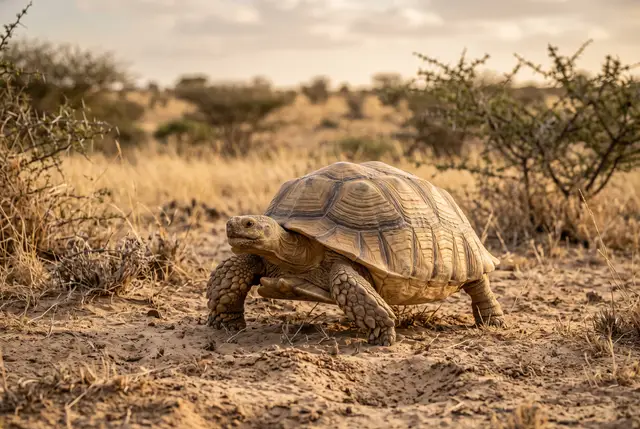
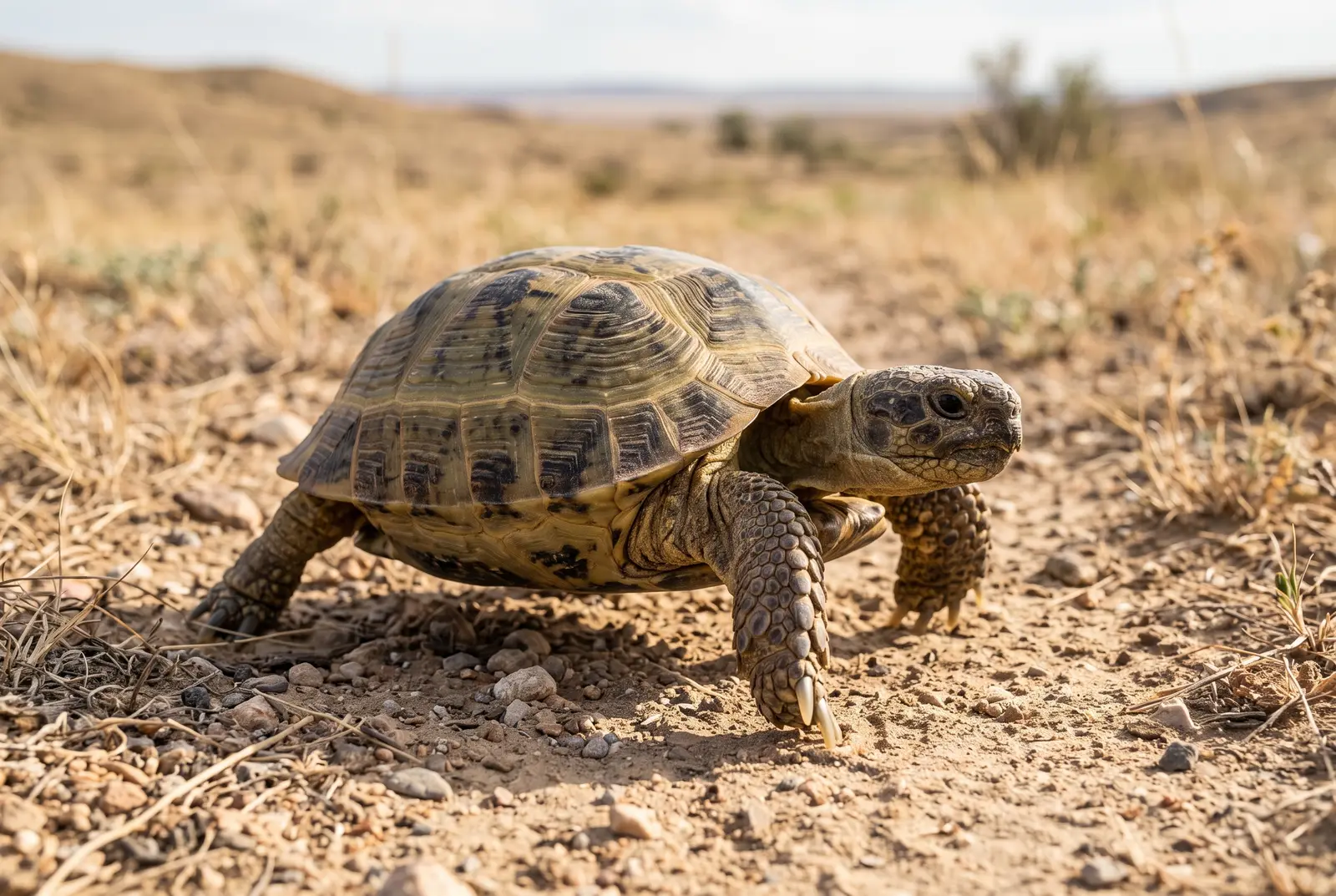
- A small land tortoise with a domed, olive-to-tan shell usually 15–20 cm long and dappled with dark blotches. It is easily told apart from its Testudo relatives by having only four claws on each front foot — the source of its common name. Females grow noticeably larger than males.
- Habitat
- It lives on the dry steppes, semi-deserts and clay slopes of Central Asia, where it digs extensive burrows. These shelters let it wait out both the freezing winters and, in a summer torpor, the fiercest heat.
- Diet
- A herbivore that grazes on herbs, grasses, succulents and flowers, with the occasional ripe fruit. It draws most of the water it needs straight from its food.
- Reproduction
- Mating follows soon after the spring emergence from hibernation. A female lays around 2–6 eggs, sometimes in several clutches per season. The young hatch after roughly 60–75 days and are fully independent from the moment they emerge.
- Lifespan
- It commonly lives 40–50 years, both in the wild and in human care.
- Did you know?
- In 1968 two of these tortoises, aboard the Soviet Zond 5 probe, became the very first vertebrates to circle the Moon and return alive to Earth.
Homeland & habitat
Where the želva čtyřprstá lives
Spin the globe to see where the species comes from and where it lives today.
Central AsiaIt comes from the dry steppes and semi-deserts of Central Asia, ranging from the Caspian Sea to western China.
Loading globe…
Native range
Drag to rotate · double-click to recentre on the homeland
10 facts about the želva čtyřprstá
The cards keep rotating — hover with your mouse to pause them.
- GroupReptilesŽelvy (Testudines) · Testudovití (Testudinidae)
- Scientific nametestudo horsfieldiiLatin name of the species
- Homeland & habitatObývá suché stepi, polopouště a hlinité svahy Střední Asie, kde si hrabe rozsáhlé nory. V nich přečkává jak mrazivé zimy, tak i největší letní vedra, kdy upadá do letního spánku.
- DietBýložravec. Spásá byliny, trávy, sukulentní rostliny a květy, občas si dopřeje i zralé plody. Vodu přijímá převážně z potravy.
- ReproductionPo jarním probuzení z hibernace probíhá páření. Samice klade obvykle 2–6 vajec, někdy i v několika snůškách za sezonu. Mláďata se líhnou zhruba po 60–75 dnech a jsou od začátku plně samostatná.
- LifespanVe volné přírodě i v lidské péči se běžně dožívá 40–50 let.
- Conservation statusVulnerableAccording to the IUCN Red List
- Did you know…?V roce 1968 se dvě želvy tohoto druhu staly na palubě sovětské sondy Zond 5 vůbec prvními obratlovci, kteří obletěli Měsíc a vrátili se živí zpět na Zem.
- Where in the zooArea A — the reptile house
- How many we keep♂ 0 · ♀ 1total: 1
Conservation status
Species vulnerability index
Least Concern
Near Threatened
Vulnerable
Endangered
Critically Endangered
Support the care of our animals
A symbolic adoption contributes to feeding, veterinary care and the development of the exhibits — and you get a certificate and updates about your animal.
Browse adoptions