Birds
Diamond dove
geopelia cuneata
IUCN Red ListLeast Concern
Audio guide
Listen to the story of this animal
0:000:00
Diamond dove
- Description
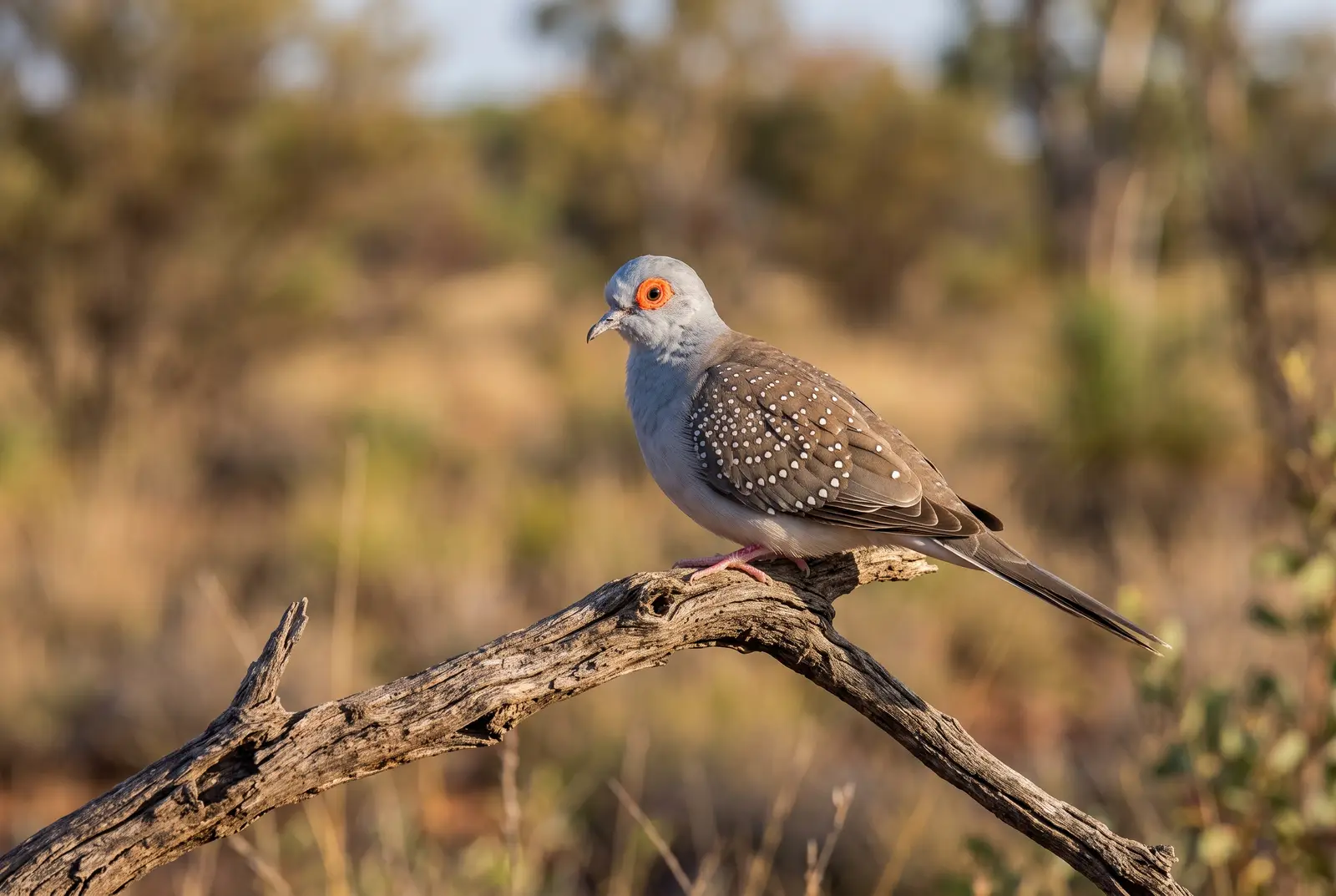
- The diamond dove is one of the world's smallest doves, measuring just 19–24 cm and weighing around 30–40 g. Its blue-grey plumage is scattered with the white wing spots that give the bird its name, and a striking orange-red ring encircles each eye. Hens are duller than the cocks. Gentle and undemanding, it is one of the most popular aviary birds worldwide.
- Habitat
- Inhabits the dry and semi-arid interior of Australia — grassy plains, scrub and open woodland, usually within reach of water.
- Diet
- Feeds mainly on small grass and herb seeds gathered from the ground, occasionally taking tiny insects.
- Reproduction
- Builds a flimsy twig nest in which the hen usually lays two white eggs. Both parents share the roughly 13–14 day incubation, and the young leave the nest after about two weeks.
- Lifespan
- Around 5–7 years in the wild, commonly 10 years or more under human care.
- Did you know?
- Despite its tiny size it is one of Australia's most widespread doves, and its soft, drawn-out cooing carries surprisingly far.
Homeland & habitat
Where the diamond dove lives
Spin the globe to see where the species comes from and where it lives today.
AustraliaThe diamond dove comes from Australia's arid interior, where it lives on grassy plains and scrub near water.
Loading globe…
Native range
Drag to rotate · double-click to recentre on the homeland
10 facts about the diamond dove
The cards keep rotating — hover with your mouse to pause them.
- GroupBirdsMěkkozobí (Columbiformes) · Holubovití (Columbidae)
- Scientific namegeopelia cuneataLatin name of the species
- Homeland & habitatObývá suché a polosuché vnitrozemí Austrálie — travnaté pláně, buš a řídké porosty, obvykle v dosahu vodních zdrojů.
- DietŽiví se převážně drobnými semeny trav a bylin, která sbírá na zemi; příležitostně pozře i drobný hmyz.
- ReproductionStaví jednoduché řídké hnízdo z větviček, do něhož samice klade zpravidla 2 bílá vejce. Na inkubaci trvající asi 13–14 dní se střídají oba rodiče a mláďata opouštějí hnízdo přibližně po dvou týdnech.
- LifespanV přírodě se dožívá kolem 5–7 let, v lidské péči běžně 10 i více let.
- Conservation statusLeast ConcernAccording to the IUCN Red List
- Did you know…?Přes svou drobnou velikost patří k nejrozšířenějším holubům Austrálie a jeho tiché, táhlé vrkání se nese překvapivě daleko.
- Where in the zooArea A — aviaries and exhibits
- How many we keep♂ 1 · ♀ 1total: 2
Conservation status
Species vulnerability index
Least Concern
Near Threatened
Vulnerable
Endangered
Critically Endangered
Support the care of our animals
A symbolic adoption contributes to feeding, veterinary care and the development of the exhibits — and you get a certificate and updates about your animal.
Browse adoptions