Waterfowl
Mandarin duck
aix galericulata
IUCN Red ListLeast Concern
Audio guide
Listen to the story of this animal
0:000:00
Mandarin duck
- Description
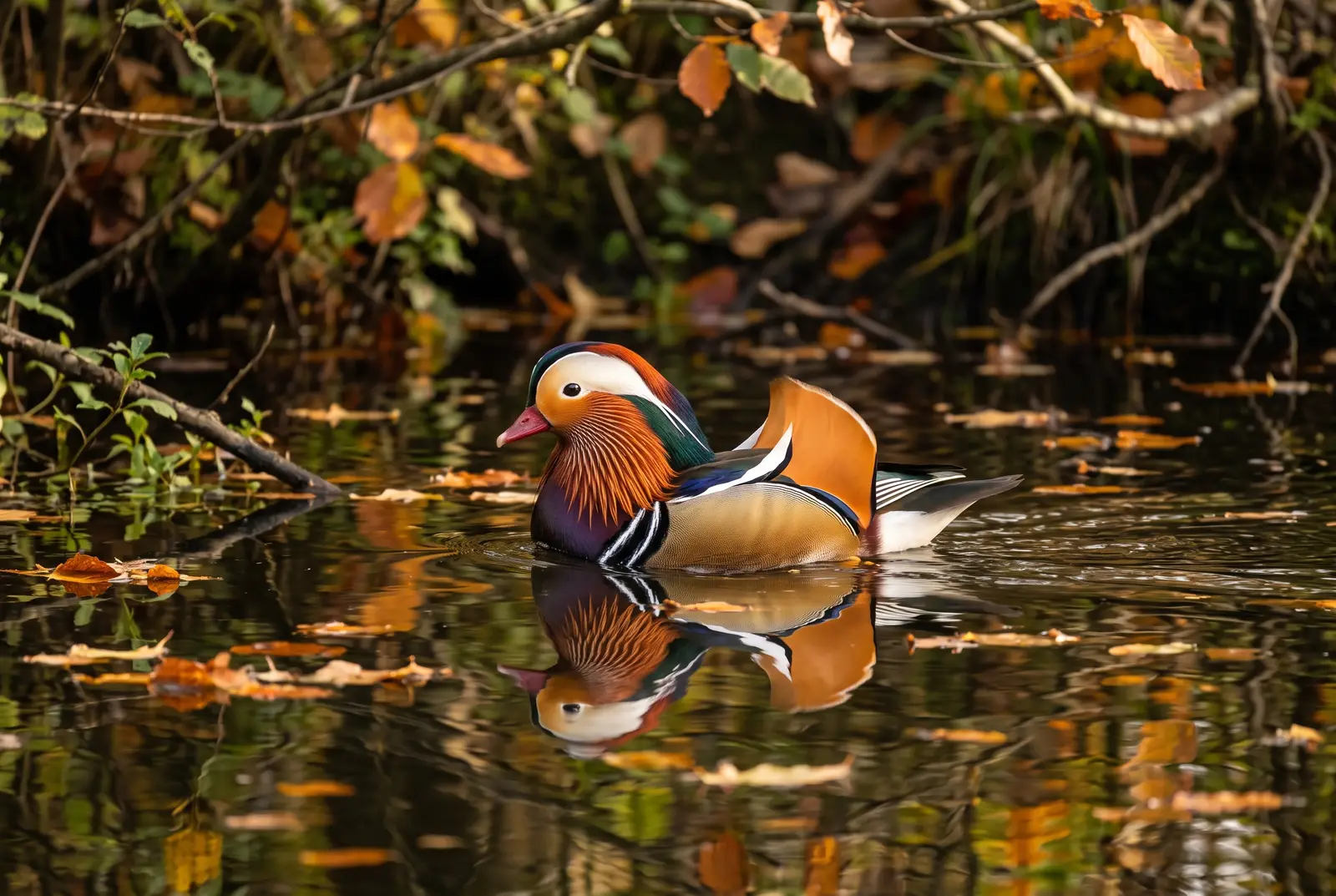
- The mandarin duck is a small, dazzlingly coloured perching duck from East Asia, 41–49 cm long. In breeding plumage the drake is among the most ornate of all waterfowl, with orange sail-like feathers rising from the wings, chestnut cheek 'whiskers' and a purple breast. The mottled grey-brown female, marked by a white eye-ring and stripe, is by contrast beautifully camouflaged. Outside the breeding season the male moults into a plain, female-like eclipse plumage.
- Habitat
- It favours wooded lakes, slow rivers and ponds fringed with dense vegetation, always near mature trees offering nesting holes. Quiet, shaded water beneath broadleaf forest is its preferred haunt.
- Diet
- An omnivore. In the warmer months it takes insects, snails, small fish and frogs, switching in autumn and winter mainly to seeds, acorns, beech mast and aquatic plants.
- Reproduction
- It nests in tree cavities, often high up and some distance from water. The female lays 9–12 eggs and incubates them alone for 28–30 days. A day after hatching, the tiny ducklings boldly leap from the hole to the ground and follow their mother to water. Pairs bond for a single season only.
- Lifespan
- Around 6–7 years in the wild, and over 10 years under human care.
- Did you know?
- In China and Korea the mandarin duck has long symbolised faithful love and marital happiness – a pair is traditionally given to newlyweds.
Homeland & habitat
Where the mandarin duck lives
Spin the globe to see where the species comes from and where it lives today.
East AsiaThe mandarin duck comes from the wooded waters of East Asia – China, Korea, Japan and the Russian Far East.
Loading globe…
Native rangeIntroduced / also today
Drag to rotate · double-click to recentre on the homeland
10 facts about the mandarin duck
The cards keep rotating — hover with your mouse to pause them.
- GroupWaterfowlvrubozobí (Anseriformes) · kachnovití (Anatidae)
- Scientific nameaix galericulataLatin name of the species
- Homeland & habitatObývá zalesněná jezera, pomalé řeky a rybníky lemované hustou vegetací, vždy poblíž starých stromů s dutinami. Vyhledává klidné, zastíněné vodní plochy pod korunami listnatých lesů.
- DietVšežravec. V teplé části roku sbírá hmyz, měkkýše, drobné ryby a žáby; na podzim a v zimě přechází hlavně na semena, žaludy, bukvice a vodní rostliny.
- ReproductionHnízdí ve stromových dutinách, často vysoko nad zemí a i dost daleko od vody. Samice klade 9–12 vajec a sama je zahřívá 28–30 dní. Den po vylíhnutí čerstvá káčata odvážně vyskočí z dutiny na zem a následují matku k vodě. Páry se tvoří vždy jen na jednu sezónu.
- LifespanVe volné přírodě se dožívá zhruba 6–7 let, v lidské péči i přes 10 let.
- Conservation statusLeast ConcernAccording to the IUCN Red List
- Did you know…?V Číně a Koreji je kachna mandarinská odedávna symbolem věrné lásky a manželského štěstí – párek se tradičně daruje novomanželům.
- Where in the zooArea A — the water-lily pond
- How many we keep♂ 4 · ♀ 5total: 9
Conservation status
Species vulnerability index
Least Concern
Near Threatened
Vulnerable
Endangered
Critically Endangered
Support the care of our animals
A symbolic adoption contributes to feeding, veterinary care and the development of the exhibits — and you get a certificate and updates about your animal.
Browse adoptions