Rodents
Patagonian Mara
Dolichotis patagonum
IUCN Red ListNear Threatened
Audio guide
Listen to the story of this animal
0:000:00
Patagonian Mara
- Description
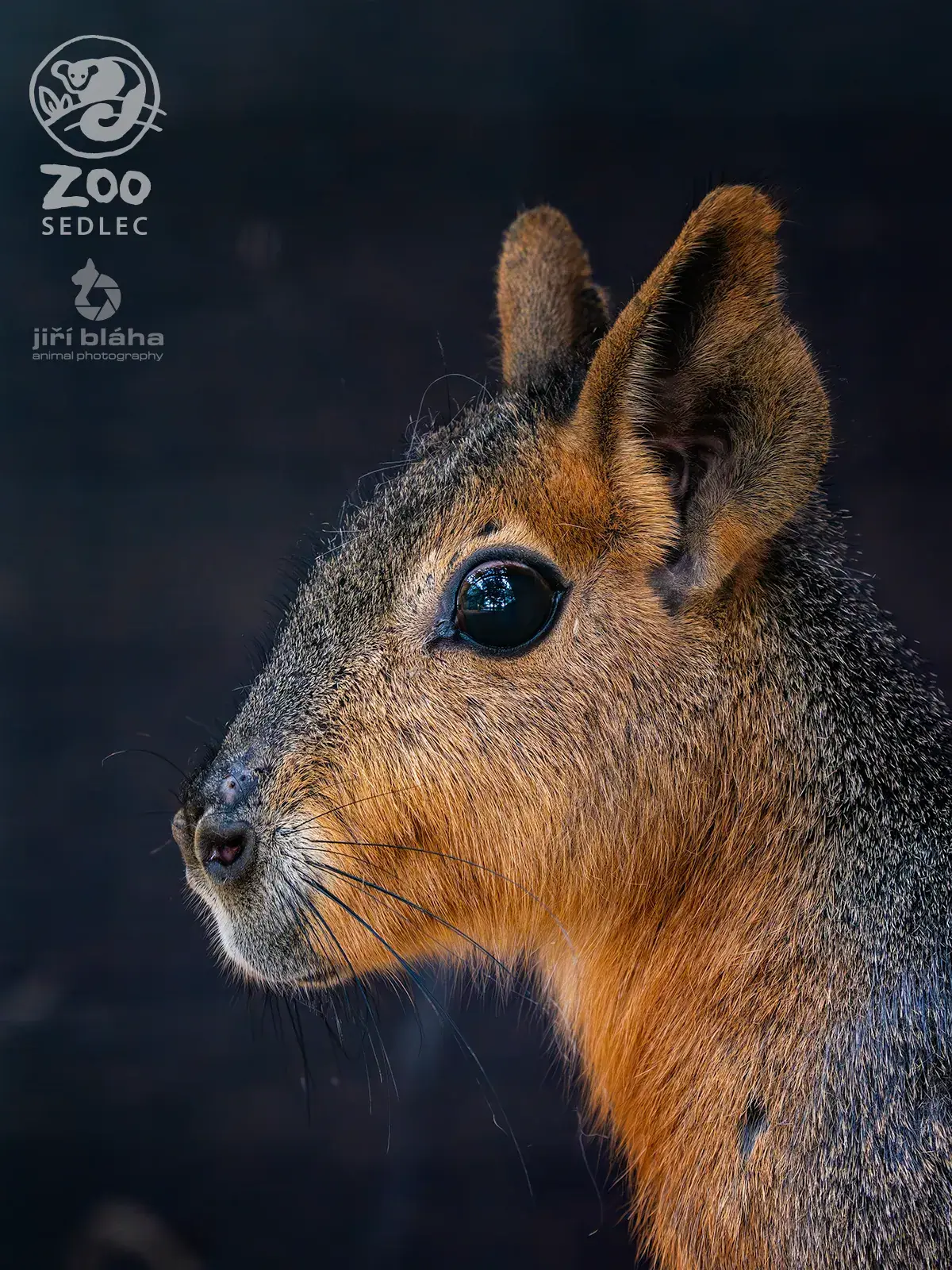
- A large, long-legged rodent that looks strikingly like a cross between a hare and a small antelope. It measures about 60-80 cm in body length with a very short tail, weighs roughly 8-16 kg, and has a greyish-brown back, a paler belly, long ears, and big eyes. Despite its deer-like appearance, it is a rodent and the second-largest member of the cavy family, related to the guinea pig.
- Habitat
- The Patagonian mara is found only in Argentina, where it lives on dry grassy pampas, shrublands, and semi-desert steppe. It favours open country that gives a clear view of approaching predators.
- Diet
- A strict herbivore, the mara grazes on grasses, herbs, leaves, roots, and occasionally bark. In dry periods it seeks out more moisture-rich plants to cope with drought.
- Reproduction
- Maras are monogamous and form lifelong pairs. Gestation lasts about 100 days, after which the female gives birth to 1-3 young in a shallow burrow. Several pairs often share communal dens, yet each mother recognises her own pups by scent and voice.
- Lifespan
- Maras live around 10 years in the wild and up to about 14 years in human care.
- Did you know?
- An excellent runner, the Patagonian mara can reach speeds of up to 45 km/h and moves with a curious bounding, stotting gait, leaping as far as 2 metres in a single jump.
Homeland & habitat
Where the patagonian mara lives
Spin the globe to see where the species comes from and where it lives today.
ArgentinaEndemic to central and southern Argentina, inhabiting dry grassy pampas, Patagonian steppe and shrubby semi-deserts.
Loading globe…
Native range
Drag to rotate · double-click to recentre on the homeland
10 facts about the patagonian mara
The cards keep rotating — hover with your mouse to pause them.
- GroupRodentsHlodavci (Rodentia) · Morčatovití (Caviidae)
- Scientific nameDolichotis patagonumLatin name of the species
- Homeland & habitatObývá suché travnaté pampy, polopouště a křovinaté oblasti Argentiny.
- DietPřevážně býložravec – spásá trávy, byliny, listy, kořínky a někdy i kůru
- ReproductionMara je monogamní – samice a samec tvoří stálý pár. Březost trvá asi 100 dní, samice vrhá 1–3 mláďata do mělké nory
- LifespanV přírodě kolem 10 let, v zajetí až 14 let.
- Conservation statusNear ThreatenedAccording to the IUCN Red List
- Did you know…?Mara stepní vypadá jako kříženec zajíce a malé antilopy, ale je příbuzná morčatům. Umí skákat až 2 metry daleko a pohybuje se zvláštním „skákavým cvalem“.
- Where in the zooArea A — aviaries and exhibits
- How many we keep♂ 2 · ♀ 2total: 4
Conservation status
Species vulnerability index
Least Concern
Near Threatened
Vulnerable
Endangered
Critically Endangered
Podle IUCN je druh hodnocen jako Near Threatened (blízký ohrožení)
Adopting the patagonian mara helps far beyond the zoo
A symbolic adoption contributes to feeding, veterinary care and the development of the exhibits — and you get a certificate and updates about your animal.
Adopt: Patagonian Mara