Birds
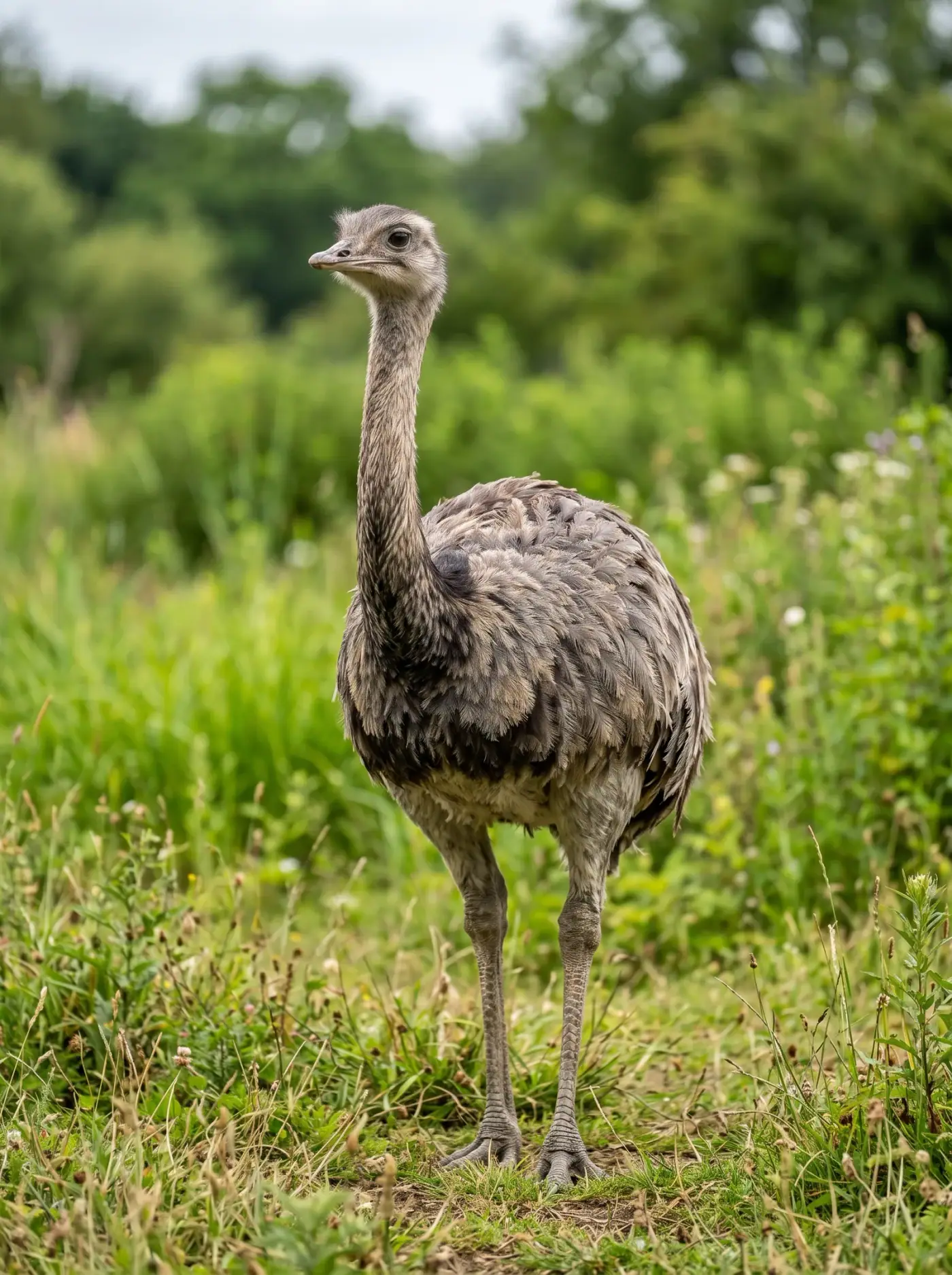
Greater rhea
Rhea americana
When to see us feeding
Regular schedule until 9 October 2026
- Tuesday, Wednesday ·
10 October – 1 November 2026 · During this period, we are open on weekends only.
Times for individual feedings and animal encounters will be available at the entrance on the day of your visit.
Audio guide
Listen to the story of this animal
Greater rhea
- Description
- They are a large, flightless bird similar to an ostrich, measuring 1.3-1.5 m. They weigh more than 23 kg.
- Habitat
- They live in the steppes and savannahs of Argentina, northeastern Brazil and Bolivia.
- Diet
- They feed on seeds, leaves, and fruits. Sometimes they also feed on insects and smaller vertebrates.
- Reproduction
- The males fertilize the females and then they lay eggs in a single place (up to 50 eggs). The male then broods them for 40 days.
- Lifespan
- 15 years or more
- Did you know?
- Their eggs can weigh up to 600 g.
Homeland & habitat
Where the greater rhea lives
Spin the globe to see where the species comes from and where it lives today.
Southeastern South AmericaA flightless ratite of the open grassland pampas, savannas and farmland across eastern and southern South America.
Drag to rotate · double-click to recentre on the homeland
10 facts about the greater rhea
The cards keep rotating — hover with your mouse to pause them.
- GroupBirdsPštrosi (Rheiformes) · Pštrosovití (Rheidae)
- Scientific nameRhea americanaLatin name of the species
- Homeland & habitatObývá otevřené travnaté pampy, savany a zemědělské oblasti Brazílie, Argentiny, Paraguaye, Uruguaye a Bolívie
- DietVšežravec – živí se semeny, listy, trávou, ovoce, hmyzem i drobnými obratlovci.
- ReproductionSamci jsou polygamní – v období rozmnožování shromažďují více samic, které kladou vejce do jedné velké hnízdní jamky. O vejce i mláďata se stará výhradně samec. Snůška může mít 10–60 vajec, inkubace trvá asi 35–40 dní.
- LifespanV přírodě kolem 10–15 let, v zajetí až 20 let.
- Conservation statusNear ThreatenedAccording to the IUCN Red List
- Did you know…?Pštros nandu dokáže běžet rychlostí až 60 km/h a při běhu často natáčí křídla jako kormidlo. Je jediným nelétavým ptákem, jehož samec sám pečuje o potomstvo od vejce až po odrostlá mláďata.
- Where in the zooArea A — aviaries and exhibits
- How many we keep♂ 1 · ♀ 1 · 3 youngtotal: 5
Conservation status
Species vulnerability index
Podle IUCN je druh hodnocen jako Near Threatened (blízký ohrožení)
Support the care of our animals
A symbolic adoption contributes to feeding, veterinary care and the development of the exhibits — and you get a certificate and updates about your animal.
Browse adoptions