Birds
Superb parrot
polytelis swainsonii
IUCN Red ListVulnerable
Audio guide
Listen to the story of this animal
0:000:00
Superb parrot
- Description
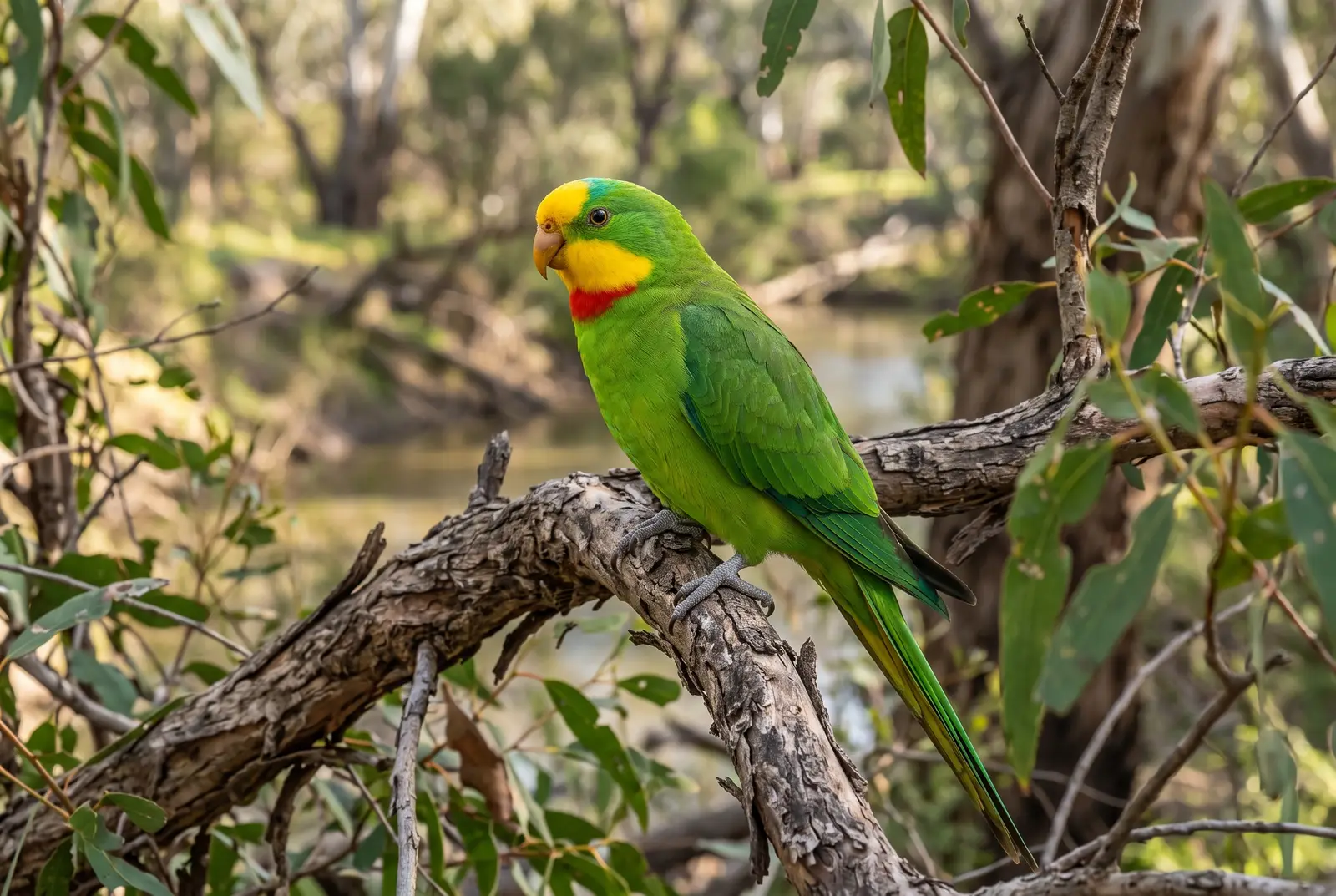
- The superb parrot is a slender, graceful parrot reaching about 40 cm in length. Males are strikingly marked: bright grass-green plumage set off by a vivid yellow forehead and throat and a crimson band across the chest. Females stay plain green with a bluish face, so the sexes are easy to tell apart at a glance.
- Habitat
- It inhabits riverine woodlands and open eucalypt forest — especially stands of old river red gum — along the Murray and Murrumbidgee rivers in south-eastern Australia.
- Diet
- It feeds on grass and herb seeds, fruit, buds, flowers and nectar, and will occasionally take insects.
- Reproduction
- Pairs nest in the hollows of old trees. The female lays four to six eggs and incubates them for about 22 days while the male feeds her throughout.
- Lifespan
- Around 15 years in the wild, and over 25 years in human care.
- Did you know?
- The colourful yellow-and-red male is one of Australia's most beautiful parrots, while the female stays quietly green — a marked sexual dimorphism that is fairly unusual among parrots.
Homeland & habitat
Where the superb parrot lives
Spin the globe to see where the species comes from and where it lives today.
South-eastern AustraliaEndemic to south-eastern Australia, living in riverine woodlands along the Murray and Murrumbidgee rivers.
Loading globe…
Native range
Drag to rotate · double-click to recentre on the homeland
10 facts about the superb parrot
The cards keep rotating — hover with your mouse to pause them.
- GroupBirdsPapoušci (Psittaciformes) · papouškovití (Psittaculidae)
- Scientific namepolytelis swainsoniiLatin name of the species
- Homeland & habitatObývá říční lužní lesy a světlé eukalyptové porosty, zejména staré blahovičníky (river red gum), podél řek Murray a Murrumbidgee na jihovýchodě Austrálie.
- DietŽiví se semeny trav a bylin, plody, poupaty, květy a nektarem; občas nepohrdne ani hmyzem.
- ReproductionHnízdí v dutinách starých stromů. Samice snáší 4–6 vajec a zahřívá je asi 22 dní, přičemž ji samec po celou dobu sezení krmí.
- LifespanV přírodě zhruba 15 let, v lidské péči se dožívá i přes 25 let.
- Conservation statusVulnerableAccording to the IUCN Red List
- Did you know…?Pestrý samec se žlutou tváří a červeným pruhem na hrudi patří k nejkrásnějším australským papouškům, zatímco samice zůstává nenápadně zelená — u papoušků poměrně vzácný případ výrazné pohlavní dvojtvárnosti.
- Where in the zooArea A — aviaries and exhibits
- How many we keep♂ 1 · ♀ 1total: 2
Conservation status
Species vulnerability index
Least Concern
Near Threatened
Vulnerable
Endangered
Critically Endangered
Support the care of our animals
A symbolic adoption contributes to feeding, veterinary care and the development of the exhibits — and you get a certificate and updates about your animal.
Browse adoptions