Birds
Zebřička pestrá
taeniopygia guttata
IUCN Red ListLeast Concern
Audio guide
Listen to the story of this animal
0:000:00
Zebřička pestrá
- Description
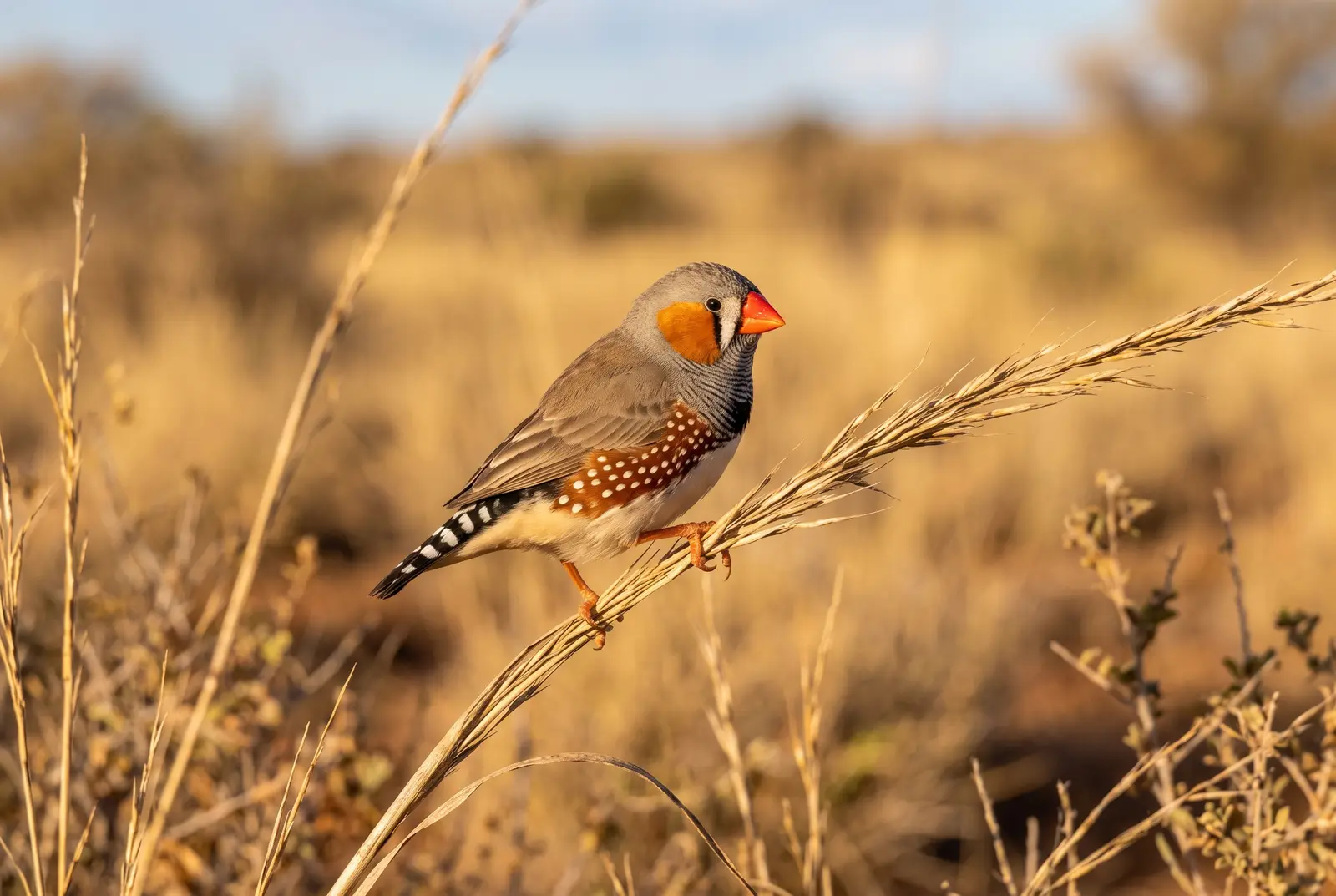
- A tiny estrildid finch, just about 10 cm long and weighing 10–15 g. The male is strikingly marked, with orange cheek patches, chestnut flanks dotted with white, black-and-white "zebra" barring across the chest and a bright orange bill; the female is plain grey with a paler beak. It is one of the most widely kept cage birds in the world.
- Habitat
- Dry grasslands, savanna and scrub across most of inland Australia and the Lesser Sunda Islands. It stays close to water and avoids dense forest and humid coasts.
- Diet
- Feeds mainly on grass seeds gathered from the ground, adding small insects to its diet during the breeding season.
- Reproduction
- An opportunistic breeder that nests after heavy rain. Pairs build a domed grass nest; the female lays 4–6 eggs and both parents share incubation for about 12–15 days, with the chicks fledging after roughly three weeks.
- Lifespan
- Usually 2–3 years in the wild and around 5–7 years in captivity, occasionally longer.
- Did you know?
- Young males learn their unique song from their father, which has made the zebra finch one of the most important model species for studying learning and memory in the brain.
Homeland & habitat
Where the zebřička pestrá lives
Spin the globe to see where the species comes from and where it lives today.
Australia and the Lesser Sunda IslandsThe zebra finch inhabits the dry grasslands and savannas of inland Australia and the Lesser Sunda Islands.
Loading globe…
Native rangeIntroduced / also today
Drag to rotate · double-click to recentre on the homeland
10 facts about the zebřička pestrá
The cards keep rotating — hover with your mouse to pause them.
- GroupBirdspěvci (Passeriformes) · astrildovití (Estrildidae)
- Scientific nametaeniopygia guttataLatin name of the species
- Homeland & habitatSuché travnaté pláně, savany a křoviny téměř celého vnitrozemí Austrálie a ostrovů Malých Sund. Drží se poblíž vody a vyhýbá se hustým lesům i vlhkému pobřeží.
- DietŽiví se převážně semeny trav, která sbírá na zemi; v době hnízdění jídelníček doplňuje drobným hmyzem.
- ReproductionHnízdí oportunisticky po vydatných deštích. Staví kulovité hnízdo z travin, samice snáší 4–6 vajec a oba rodiče je střídavě zahřívají asi 12–15 dní. Mláďata opouštějí hnízdo přibližně po třech týdnech.
- LifespanV přírodě zpravidla 2–3 roky, v zajetí obvykle 5–7 let, výjimečně i déle.
- Conservation statusLeast ConcernAccording to the IUCN Red List
- Did you know…?Mladí samci se učí svůj jedinečný zpěv od otce, díky čemuž je zebřička jedním z nejdůležitějších modelových druhů pro výzkum učení a paměti v mozku.
- Where in the zooArea A — aviaries and exhibits
- How many we keep♂ 2 · ♀ 2total: 4
Conservation status
Species vulnerability index
Least Concern
Near Threatened
Vulnerable
Endangered
Critically Endangered
Support the care of our animals
A symbolic adoption contributes to feeding, veterinary care and the development of the exhibits — and you get a certificate and updates about your animal.
Browse adoptions